
Do You Need Radon Testing with Your Chicago Home Inspection?
Buying a home in Chicago comes with a long checklist. One question that often gets overlooked is radon testing. Many buyers assume a standard home inspection covers everything. That is not always the case.
So, do you need radon testing with your Chicago home inspection? In most cases, the answer is yes.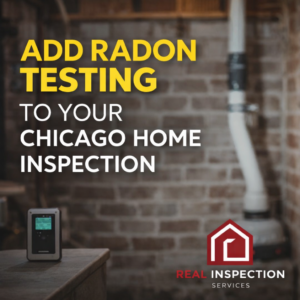
What Is Radon and Why Should Chicago Homebuyers Care?
Radon is a naturally occurring radioactive gas that forms when uranium breaks down in soil. You cannot see it, smell it, or taste it. The only way to know if it is present is through testing.
According to the U.S. Environmental Protection Agency, radon is the second leading cause of lung cancer in the United States. The Illinois Emergency Management Agency reports that nearly 40 percent of homes tested in Illinois have elevated radon levels.
In a city like Chicago, where many homes have basements, radon can enter through foundation cracks, sump pits, and floor drains. Even newer homes are not immune.
Does a Standard Chicago Home Inspection Include Radon Testing?
Most standard home inspections do not automatically include radon testing. A home inspection focuses on structural components, roofing, plumbing, electrical systems, HVAC, and visible safety concerns.
Radon testing is typically offered as an add-on service.
If you assume it is included and do not specifically request it, you may close on your home without ever knowing the radon levels. That creates unnecessary risk.
Is Radon Testing Recommended in Chicago?
Yes. The U.S. Environmental Protection Agency recommends testing all homes below the third floor for radon, regardless of geographic location. However, Illinois is considered a high radon potential state.
Chicago and surrounding suburbs regularly produce test results above the EPA action level of 4.0 pCi/L. That means mitigation may be recommended to reduce indoor radon concentrations.
Because radon levels can vary from house to house, even neighbors can have very different readings. Testing is the only reliable way to know your specific risk.
When Should You Schedule Radon Testing During the Home Buying Process?
The best time to test for radon is during your inspection contingency period. Testing typically takes 48 hours. Results are available quickly, allowing you to:
- Request mitigation before closing
- Negotiate credits or repairs
- Make an informed decision about the purchase
Bundling radon testing with your Chicago home inspection saves time and ensures everything is handled in one coordinated visit.
What Happens If Radon Levels Are High?
If elevated levels are detected, do not panic. Radon mitigation systems are highly effective and commonly installed in Chicago homes.
A mitigation system typically uses a vent pipe and fan to redirect radon gas from beneath the foundation to the exterior of the home. Once installed, levels are usually reduced significantly.
The cost of mitigation is often modest compared to the overall price of a home, and many sellers agree to address it during negotiations.
Should You Add Radon Testing to Your Chicago Home Inspection?
If you are buying a home in Chicago, adding radon testing is a smart decision. It provides clarity, protects your long term health, and strengthens your negotiating position.
A comprehensive inspection should not just tell you what is visible. It should also uncover hidden risks.
When scheduling your Chicago home inspection, make sure radon testing is part of the conversation. It is a small step that can make a big difference.