
What Slows Down a Home Inspection (and How to Avoid It)
When buying or selling a home, most people want the home inspection process to move quickly and smoothly. Delays during a home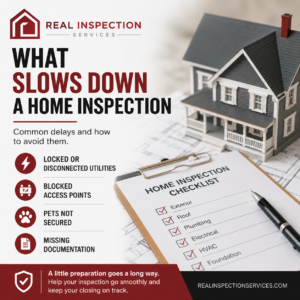 inspection can create frustration, slow down negotiations, and sometimes even push back closing dates.
The good news is that many inspection delays are completely avoidable.
At Real Inspection Services, we have seen a few common issues come up repeatedly during inspections. A little preparation before the inspector arrives can save time and help the process stay on track.
Why Do Home Inspections Get Delayed?
A home inspection involves more than just walking through the property. Inspectors need safe and complete access to major systems and components throughout the home. If something is inaccessible or not functioning properly, the inspection may need to be delayed or revisited.
For buyers, sellers, landlords, and real estate agents, understanding these common problems can help avoid unnecessary stress.
Locked or Disconnected Utilities
One of the biggest reasons inspections are delayed is because utilities are turned off.
Home inspectors typically need access to:
- Electricity
- Water
- Gas service
- HVAC systems
If utilities are disconnected, many important systems cannot be properly tested. This can prevent the inspector from evaluating items like:
- Plumbing fixtures
- Water heaters
- Air conditioning systems
- Furnaces
- Appliances
- Electrical outlets and panels
Vacant homes are especially common for this issue.
How to Avoid It
Before the inspection date:
- Confirm that all utilities are active
- Make sure breakers are turned on
- Verify pilot lights are operational if applicable
- Check with the listing agent or homeowner ahead of time
A quick utility check can prevent the need for a second inspection visit.
Blocked Access Points
Home inspectors need access to key parts of the property. Clutter, storage, furniture, or locked areas can slow the process significantly.
Common problem areas include:
- Electrical panels
- Attics
- Crawlspaces
- Basements
- Water heaters
- HVAC equipment
- Garage walls and foundations
If an inspector cannot safely access these areas, portions of the inspection may need to be marked as inaccessible.
How to Avoid It
Before inspection day:
- Move boxes and storage away from access panels
- Clear pathways to attics and crawlspaces
- Unlock gates, sheds, and utility rooms
- Ensure garage walls and foundation areas are visible
Even clearing a few feet of space can make a major difference.
Pets Not Properly Secured
Friendly pets can still create complications during a home inspection.
Dogs may become protective when strangers enter the home. Cats sometimes escape through open doors during the inspection process. Inspectors also need freedom to move safely between rooms without distractions or safety concerns.
How to Avoid It
To keep everyone safe:
- Secure pets in a separate room
- Use crates if appropriate
- Arrange for pets to be temporarily off-site if possible
- Inform the inspector ahead of time about any animals in the home
This helps the inspection move faster and reduces stress for both pets and people.
Missing Documentation
Certain home features may require supporting documentation during the transaction process.
Examples include:
- Roof replacements
- HVAC installations
- Foundation repairs
- Window replacements
- Radon mitigation systems
- Permits for additions or renovations
If buyers or agents request documentation after the inspection and it cannot be located quickly, negotiations can slow down.
How to Avoid It
Before listing the home:
- Gather repair invoices
- Locate warranties
- Collect permit paperwork
- Keep maintenance records organized
Having documents ready can help answer buyer questions quickly and keep the transaction moving.
Should Sellers Prepare Before a Home Inspection?
Absolutely.
A well-prepared home inspection benefits everyone involved:
- Buyers receive a more complete evaluation
- Sellers reduce the risk of delays
- Agents help transactions move more smoothly
- Inspectors can work more efficiently
Preparation does not mean hiding issues. It simply means making the home accessible and ready for evaluation.
What Happens If an Inspector Cannot Access Something?
If areas are inaccessible or systems cannot be tested, the inspection report will typically note those limitations.
In some cases, the buyer may request:
- A return inspection
- Additional specialist evaluations
- Further documentation
- Repair verification
This can add time, additional costs, and scheduling complications.
Summary
Most home inspection delays are preventable with a little planning beforehand.
Making sure utilities are active, access points are clear, pets are secured, and documentation is available can help the inspection process move much more smoothly.
Whether you are buying, selling, or managing a property, preparation helps reduce surprises and keeps the transaction moving forward.
If you need a professional home inspection in the Chicago area, Real Inspection Services provides detailed inspections with a focus on communication, efficiency, and helping clients make informed decisions.