
Mold Inspection vs. Mold Testing: What Chicago Homeowners Should Know
When moisture sneaks into hidden corners of a home, mold often isn’t far behind. In Chicago—where humid summers, older housing stock, and fluctuating temperatures create ideal mold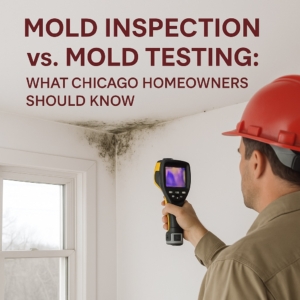 conditions—homeowners often wonder whether they need a mold inspection or mold testing. While the terms are often used interchangeably, they’re not the same—and understanding the difference can help you make the right decision for your home.
What Is a Mold Inspection?
A mold inspection is a visual, professional assessment of your home to locate moisture issues and identify areas where mold may be present. A certified inspector may use tools such as moisture meters and infrared cameras to detect moisture behind walls or in structural components.
For background on why moisture is the biggest driver of mold growth, see the EPA’s guide on mold and moisture:
What Is Mold Testing?
Mold testing involves collecting air or surface samples to determine mold type, concentration, and whether indoor levels exceed normal outdoor levels. Testing is especially useful when mold isn’t visible, when documentation is required in a real estate transaction, or when a homeowner wants to verify that previous remediation was successful.
The CDC provides guidance on mold exposure and health effects here:
https://www.cdc.gov/mold/faqs.htm
Which Do You Need? Inspection, Testing, or Both?
Many homeowners start with an inspection, because it often identifies the source of the problem: the moisture. Testing becomes valuable when you need clarity, verification, or documentation, including during home sales or when confirming remediation.
To better understand professional mold standards, the AIHA (American Industrial Hygiene Association) outlines general mold assessment and sampling recommendations:
Inspection = Finding the cause
Testing = Understanding what type of mold and how much
Why Early Detection Matters in Chicago Homes
Chicago’s climate swings—from humid summers to freezing winters—create conditions where mold thrives. Common issues like basement seepage, attic condensation, and ice dams can lead to undetected mold growth.
Early mold detection helps:
- Prevent structural damage
- Improve indoor air quality
- Protect long-term home value
- Reduce remediation costs
Learn more about preventing moisture and mold from the U.S. Department of Housing and Urban Development (HUD):
https://www.hud.gov/program_offices/healthy_homes/healthyhomes/mold
Final Thoughts
Mold inspection and mold testing each play a distinct role in maintaining a healthy home. Whether you’re noticing signs of mold, preparing to buy or sell, or simply want peace of mind, understanding the difference helps Chicago homeowners make informed decisions.